Interested in joining the iSpace team?
 Interested in contributing to innovative research at the intersection of Virtual Reality/XR, Psychology/Cognitive Science, Informatics, Human Factors/HCI, and Art/Design in an interdisciplinary team?
I’m always looking for bright and motivated PhD and MSc students and postDocs to join the iSpace lab at our School of Interactive Arts & Technology (SIAT), Simon Fraser University in the greater Vancouver region in beautiful British Columbia on the west coast of Canada, where the Pacific Ocean meets the Coastal Mountain range. Greater Vancouver is known as one of the most ethnically diverse areas in Canada and has been ranked as one of the most livable cities in the world based on quality of life (especially for those who love the outdoors (skiing, hiking, water sports, beach volleyball…)).
Expectations & potential projects
Applicants should be highly motivated and have a strong interest in interdisciplinary scientific research aligned with the overall goals and vision of the iSpace lab (see ispace.iat.sfu.ca/vision/) and at least one of our recent Projects. Most of our work can be summarized under the overarching goal of Designing and investigating Virtual Reality for positive impact on individuals and society. In my TEDx talk on “Could Virtual Reality make us more human?” I provide some examples and an overview (technology improved since then, but the vision and opportunities/challenges remained):
In particular, I am looking for student to work in one of the following areas (some grant-supported / some grants are currently under review/planning):
Designing and investigating intuitive interfaces for embodied flying in VR & teleoperation:
Design & evaluate user-powered motion cueing interfaces to enable more natural and intuitive locomotion through and spatial orientation in VR, for both ground-based navigation and especially for full 3D navigation (both virtual flying and tele-presence/tele-operation applications like drones). One of the aims is to create an empowering embodied and seamless flying experiences, similar to and inspired by lucid dreaming, as well improving user experience, usability, and performance while minimizing motion sickness.
Related prior projects include our work on embodied VR flying with HyperJumping to reduce motion sickness, leaning-based interfaces for ground-based locomotion and flying, interfaces allowing for concurrent locomotion and interaction in VR, and telepresence.
Reducing motion sickness in virtual environments:
Investigate ways to better mitigate/reduce cybersickness in VR (and immersive tele-presence and teleoperation (incl. first-person view drones), and develop a toolbox for better assessing and reducing cybersickness.
Related prior projects include our work on HyperJuming (merging continuous and teleporting into one seamless interface, for ground-based locomotion as well as embodied flying) as well as designing more embodied and intuitive VR locomotion interfaces that also helped to reduce motion sickness, for both ground-based locomotion and flying, and interfaces allowing for concurrent locomotion and interaction in VR.
Designing and investigating Virtual Reality experiences towards enhancing health and wellbeing:
We are exploring how therapeutic exercises can be implemented within a VR intervention to generate insight towards VR as a ‘positive technology’ for individuals with chronic illness. We are modifying our existing VR environment used in related recent studies to explore how integration of therapeutic exercises may enhance subjective and psychological wellbeing. Additionally, we will add features of interactivity such as biosensors and sensor-driven machine learning/procedural generation of visuals towards enhancing the personalization, emotion elicitation, and immersion of the VR intervention. We will integrate the lens of individuals who will be the users of the VR intervention, with their participation and input central to the exploratory research process. Practical outcomes will be the development of an interdisciplinary framework for design of the VR intervention and resulting pilot VR intervention will be evaluated for early indicators of feasibility within targeted end users. This project provides a unique opportunity for interdisciplinary collaboration and knowledge translation between human-computer interaction, clinical practice, and health sciences.
VR4Good/XR4Good:
More generally, how we can bring together immersive virtual reality/XR with artistic/creative practices and emerging technologies such as AI and bio/neurosensing to provide users with profound and meaningful experiences that have a positive impact (on humans, society and/or our planet)?
Related prior projects include our work on Design Strategies for Genuine Connection, Virtual Earthgazing to tap into and better investigate the benefits of the Overview effect and other awe-inspiring and self-transcendent VR experiences, and immersive experiences/installations such as Virtual Transcendent Dream,JeL, LucidLoop, Body Remixer, StarStuff, Synedelica, Breath of Light, etc.
Other potential projects include
- Investigating how we can use immersive virtual reality, biosensing, and brain-computer interfaces to provide users with profound and meaningful experiences such as the Overview effect
- Devising new gamified research (or researchified gaming) paradigms for bringing together advantages from research and gaming
- Investigate and utilize multi-modal and higher-level synergistic benefits to enhance self-motion illusions (vection) in VR, which contributed to fundamental knowledge and can help to enable more compelling and effective human-computer interfaces for immersive VR.
- Investigating the functional/behavioral significance of self-motion illusions (vection): E.g., does vection allow us to perform tasks we could not otherwise perform as well? We have first evidence that vection can facilitate perspective switches, and several experimental paradigms lined up to investigate further behavioral measures (Riecke, Feuereissen, Rieser, McNamara, 2015).
and more generally
- Human multi-modal spatial cognition, spatial orientation, spatial updating
- Enabling robust and effortless spatial orientation in virtual environments and telepresence (e.g., conference robots, drones) — e.g., through designing improved locomotion interfaces and paradigms for 2D and 3D locomotion
- Self-motion perception, illusions (“vection”), and simulation; Multi-modal contributions and interactions
- Overview effect and other pivotal experiences and how to elicit them in VR
- Theory, design guidelines, and VR experiences supporting positive transformative experiences — from self-transcendent and awe-inspiring experiences to VR4Good and addressing Climate Change
- Brain-computer interfaces and biofeedback (breathing, EEG…) for immersive, playful VR interaction design to foster desireable states (e.g., mindfulness, relaxation, overview effect, pivotal experiences).
- Design and iterative evaluation and improvement of perceptually oriented, multi-modal human-computer interfaces and human-centered, effective virtual reality simulations and experiences. This could include unconventional VR interfaces, immersive VR for meditation, and other novel ideas.
As the iSpace lab works at the intersection of Informatics, Psychology/Cognitive Science, Human Factors/HCI/Immersive Interaction Design, and Virtual Reality, you should bring a strong background in at least one of these areas and be excited to expand into the other areas. PhD and MSc applications must also meet the regular admission criteria and will undergo the regular admissions processes. Note that MSc applications will only be considered if they show a strong interest in research, scholarly dissemination (and potentially getting a PhD). Note that theses in my lab are written as a cumulative thesis (i.e., based on scholarly papers).
Funding
Students: Funding is provided through a combination of teaching assistantships, scholarships, fellowships and research assistantships. Some students also take on additional part-time jobs in industry (as the hourly rate is often higher). You will also receive financial support when presenting your research in suitable scholarly conferences.
PostDocs: there are currently no fully funded postDoc positions in the iSpace lab unfortunately, although I can provide some interim funding and am open to suitable postDocs that bring their own funding (at least until we find additional funds). I’d be happy to assist in applying for external funding — there are multiple options including Banting, Mitacs, NSERC/SSHRC…. PostDoc Funding is provided at standard Canadian (NSERC) rates including vacation pay and benefits. Additional top-up is negotiable if you contribute substantially to the writing of research grants.
Application
If you are interested in joining the iSpace team, please read on, then send me an email ( ) and include the following.
- your curriculum vitae including your publication record,
- your research interests and how they relate to the above research areas or prior/ongoing projects (you do not need a concrete research proposal — it’s typically best developed together)
- unofficial transcript, and any other information/documents/links to demonstrate your background and interest.
Please indicate how you might see yourself fit in. This is essential — please understand that I won’t respond to generic or mass-emails (I get many of them). You don’t need to have a specific research project in mind to apply, though, as long as you are open and excited about the kind of research we do. It helps if you add “PhD/MSc/PostDoc Application” to the email subject line.
Please also indicate if you have any experience in programming in general, VR-specific programming (especially in Unity), VR hardware/software, and statistics/experimental design/data analysis and any experience in scholarly writing you might have. I don’t require expertize in all these areas, but it’s useful to understand where your background and strengths are and how you’d fit into the team. Feel free to add any other skills (academic or non-academic) that I should be aware of or that could be useful.
Positions are highly competitive, with applications due around January for a September start. Review of applications is ongoing and will continue until all positions are filled. Our lab values the diversity of its community and is committed to fostering an inclusive environment for all members. We welcome applications from all qualified individuals, regardless of race, color, religion, sex, sexual orientation, gender identity, national origin, age, or disability. We believe that a diverse and transdisciplinary team enriches our research and enhances creativity and innovation. We are dedicated to providing equal opportunities and ensuring that our selection process is fair and unbiased. Join us in our mission to push the boundaries of knowledge in a supportive and inclusive environment.
I’d be happy to arrange Zoom interviews if there seems to be a good fit. Review of materials is ongoing and will continue until all positions are filled.
I look forward to receiving your application!
Bernhard
Prospective grad students: ALL graduate students at SIAT are recommended for admission by the Graduate Admission Committee and then admitted by the Dean of Graduate Studies at SFU. Therefore you MUST satisfy all the requirements set up by SIAT and SFU. Please check SIAT’s grad admission procedures and make sure to contact me before submitting your application. Off-cycle admission is possible for excellent candidates. Please mention my name in your submission, and contact me before submitting your application.
Below is a summary of my main research agenda so you can assess if and how you might best fit into our team. There’s also an outline of some of the skills, experience, and characteristics that we value highly and will be useful for iSpace members. The application process is competitive, and apart from your GPA the main admission criteria are how well you’d fit into the iSpace team and can contribute to the overall research agenda and vision (see below for details). I only supervise MSc and PhD students with a strong research orientation.
If you have already research ideas when applying, great! If not, and you are just really excited about contributing to our research agenda and vision (and are capable in doing so), that also fine, and we should discuss ideas before you write your “letter of intent” to make sure it will be a good mutual match. In either case, please check the iSpace research agenda and vision and our recent projects and publications and talks/demos to get a better idea of our research scope and approaches (although I’m always interested in expanding into new exciting research areas).
Do you fit in?
Below is a draft of some of the skills, experience, and characteristics that we value highly and will be useful for iSpace members. As the iSpace lab works at the intersection of Informatics, Psychology/Cognitive Science, Human Factors/HCI/Interaction Design/UX, and Virtual Reality, you should bring a strong background in at least one of these areas. Of course, I don’t expect you to have mastery in all of these skills when joining the team — but you should be excited to expand in these areas. Note that all joining members should have at least some background in programming and be eager to do research.
Programming / computational literacy
Experience in programming, especially in the context of VR or Computer graphics is quite valuable. We currently use mostly the popular game/VR engine Unity3D which Bernhard also uses in his teaching of the immersive environments course IAT445 and the Semester in Alternate Realities. We occasionally still use Vizard from Worldviz, a python-based programming library for the real-time VR simulations. One of the tools we use for creating naturalistic 3D content is the procedural modeling modeling tool CityEngine.
Experimental design and statistics:
Experience in cleverly designing, conducting and analyzing mixed-methods experiments with human observers. [Bernhard occasionally teaches this also in the quantitative research methods and design course IAT 802. We typically use JMP and SPSS for statistical analysis.
Writing, presentation, and communication skills:
Publishing and presenting research is not only the currency in academics, but also a way to give back to the community, both professional and general public. Thus, we highly value good scholarly writing, presentation, and general social/networking/communication skills.
Proactivity, enthusiasm, perseverance/grit and team/interpersonal skills:
Working in an interdisciplinary team can have it’s challenges, but it is also incredibly rewarding, especially for people with high proactivity, enthusiasm & perseverance, and good communication and team/interpersonal skills — and a good sense of humour.
Technical & building skills:
Technical skills in building, construction, maintenance, and other geeky and MacGyver-ly skill (from electronics to setting up computers to building physical structures in the lab) can also be valuable (but aren’t a pre-requisite for being an iSpacer). Experience with VR equipment is certainly a plus. We’re currently using a custom-designed 2‑axis circular treadmill, several visualization setups including several wide-FOV HMDs (e.g., HP Reverb G2 Omnicept (that includes physiological user data), Oculus Quest (1÷2), Valve Index, HTC Vive, HTC Vive Pro Eye, Oculus Rift, and formerly the NVIS SX 111), a large-screen passive stereo projection setup and started integrating various sensors including the Leap motion controller as well as EEG systems from Emotiv (EPOC & Insight) and Interaxon (Muse 2) integrated with a real-time 3D game engine (Unity3D) that we also use in our teaching. We’re currently working on improving our real-time spatialized sound rendering (HRTF convolution, and have the equipment for binaural recordings. We’re developing our own user-powered motion cueing interfaces, in particular, lean and elegant leaning-based locomotion interfaces such as the NaviChair and NaviBoard or earlier a pimped Gyroxus gaming motion chair with additional shaker for vibration rendering.
What is SIAT & SFU?
Check out our SIAT webiste or watch the or check out SIAT’s YouTube channel.
Simon Fraser University (SFU) ranks consistently as one of the top universities in Canada. Bernhard Riecke’s lab is part of SIAT, a young, vibrant and interdisciplinary department at SFU with research in HCI, interaction design, media arts and many other areas. It is located at the SFU Surrey campus (directly on the skytrain transit line) in Greater Vancouver. Greater Vancouver lies along the west coast of Canada where the Pacific Ocean meets the Coast Mountain range. With a population of over 2 million, Greater Vancouver is known as one of the most ethnically diverse areas in Canada and has been ranked as one of the most livable cities in the world. Moreover, Vancouver is a great destination for those who love the outdoors and nature (e.g., skiing, hiking, water sports) and the indoors (e.g., museums, art, theatre, diverse ethnic food, coffee, and of course hockey).
Conferences we like to attend and publish in
(incomplete and somewhat outdated list, see publications page for details)
- SIG CHI (Special Interest Group on Computer–Human Interaction)
- IEEE VR Conference (alternative link to IEEEVR.org)
- TEDactive, TEDxSFU, TEDxEastVan, & TEDSummit
- ACM VRST (Virtual Reality Software and Technology)
- VRVis Conference Calendar
- ACM Symposium on Applied Perception (SAP) (formerly: Applied Perception in Graphics & Visualization)
- ACM Conference on Designing Interactive Systems (DIS)
- IMRF (International Multimodal Research forum)
- and many other venues
Spatial Cognition
- Spatial Cognition Conference
- spatial cognition 2012 meeting
- International Conference on Spatial Cognition
- European Workshop on Imagery and Cognition
- SILC list of spatial cognition conferences
Psychology & Cognitive Science
- Psychonomics
- VSS Vision Sciences Society annual meeting
- EVCP European Conference on Visual Perception
- CogSci
- Mindfulness conference
Networking & Links
[Under Construction]
- SFU
- my SFU website
- (previous network) GRAND NCE (Graphics, Animation, and New Media Network of Centres of Excellence)
- )
Contact Info

School of Interactive Arts + Technology (SIAT)
Simon Fraser University Surrey
250 ‑13450 102 Avenue Surrey, BC V3T 0A3 CANADA
iSpace Lab (aka Alternate Realities Lab): SUR 3800 (3rd floor)
my office: SUR 2770 (2nd floor)
Campus Guide & Maps & SIAT Contacts/Infos & SIAT directions
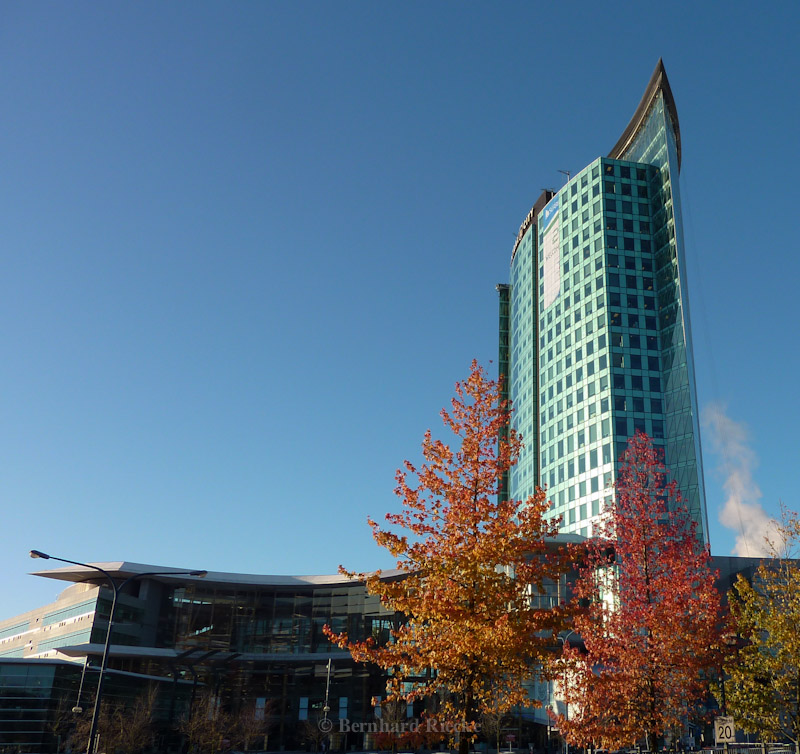
Directions by Skytrain: take the expo line direction King George, exit at Surrey Central, walk across the parking lot to the tall office tower (with the SFU sign above the Blenz), take the wide stairs/escalator up to the Mezzanine (=2nd) floor.
Take a right for my office (2759) which is in the SIAT corridor, or walk up to the 3rd floor and take a right for the iSpace lab (room 3800).
Note that the elevator won’t let you exit on the 2nd or 3rd floor.
phone: we don’t have office phones any more
phone: +1 778.782.3111 (3800 lab)
fax: +1 778.782.7488
Map and Directions (large map)
250 ‑13450 102 Avenue
Surrey, BC V3T 0A3 CANADA
Google Street Map View
Contact Us
email me at
[recaptcha_form]


